
Last week, the global tennis spotlight once again centered on London.
The 2026 Laver Cup took place from September 25 to 27 at The O2 in London, UK. In this ninth edition of the tournament, Team Europe and Team World went head-to-head in a three-day team competition, with Team Europe ultimately clinching victory over Team World with a 13–5 scoreline.
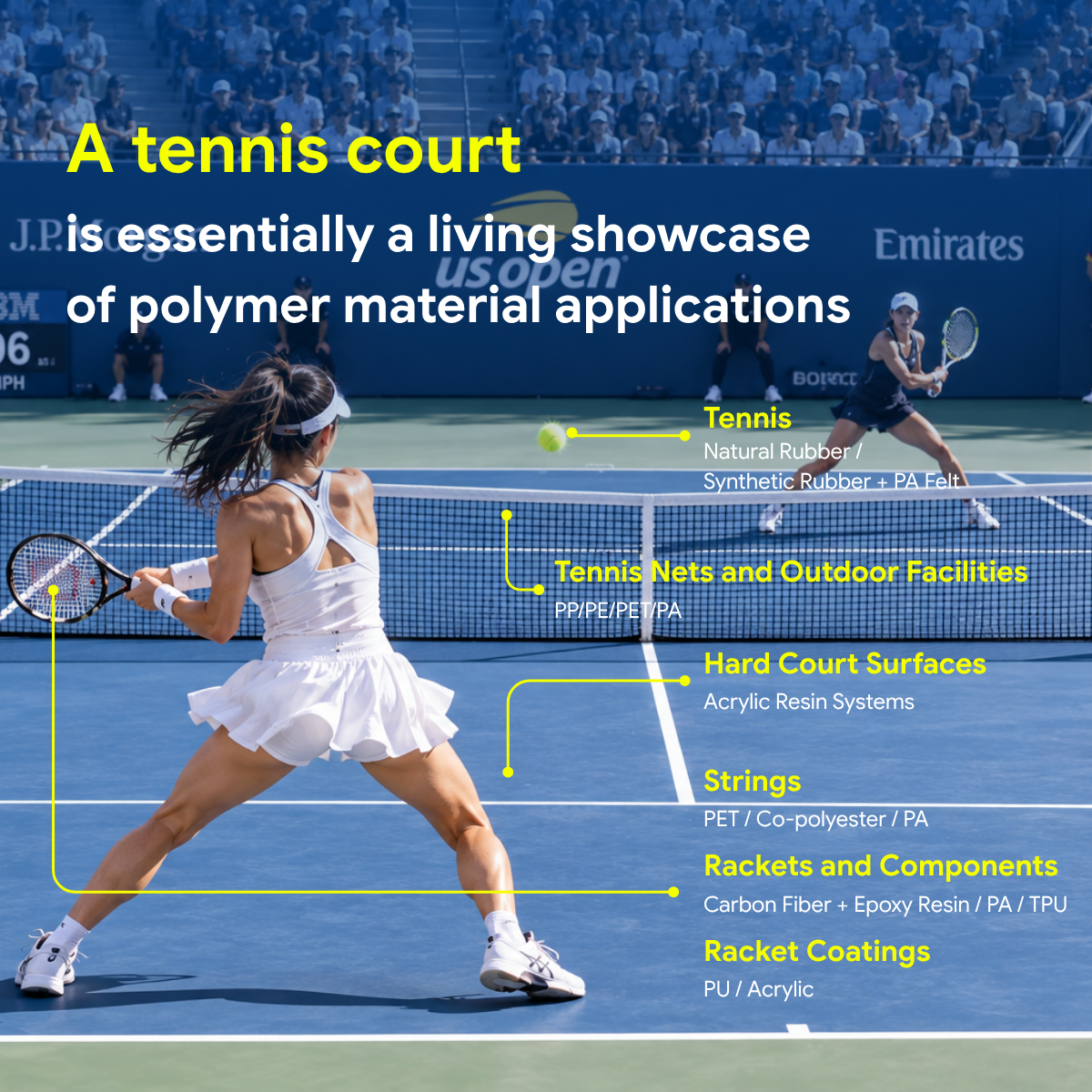
While fans were captivated by serve speeds, baseline power, spin, placement, and match outcomes, shifting perspective from the sporting arena to materials science reveals that an elite tennis tournament is essentially a masterclass in polymer material applications.
From the rackets, strings, and grips in the players' hands to the high-velocity tennis balls, these essentials involve rubbers, polyesters, polyamides, polyurethanes, thermoplastic elastomers, specialized coatings, and fiber-reinforced composites.
Looking beyond the indoor arena of The O2 to standard outdoor tennis facilities reveals even broader polymer applications, including court coatings, nets, stadium seating, and canopy shades.
Though engineered for distinct functions, these materials share common, persistent challenges:
Light, heat, oxygen, moisture, mechanical stress, and time.
Preserving material performance throughout processing and actual service life is therefore a cornerstone of polymer stabilization technology.
At a Glance: Materials Used in Tennis Gear and Their Stabilization Needs
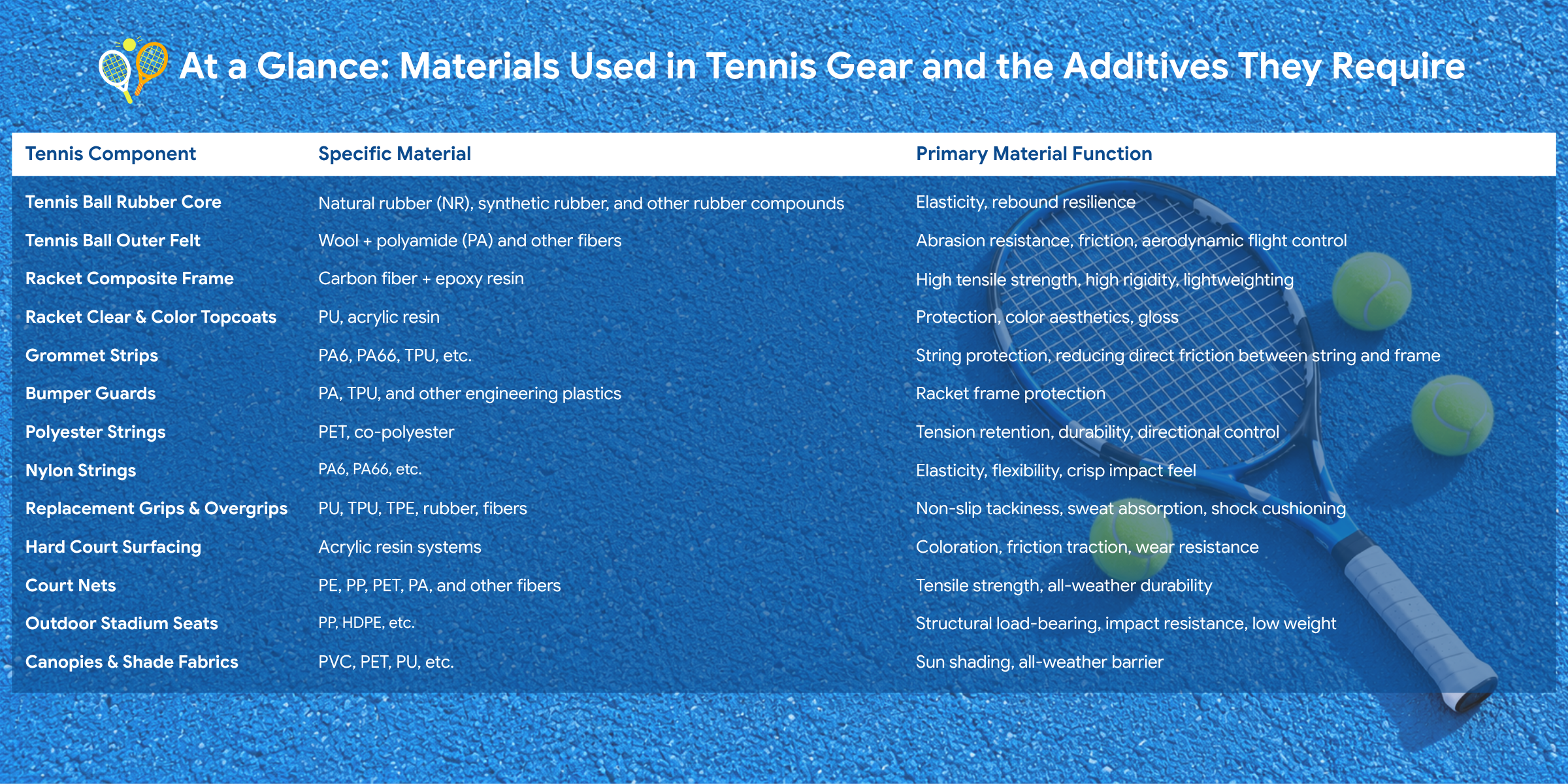
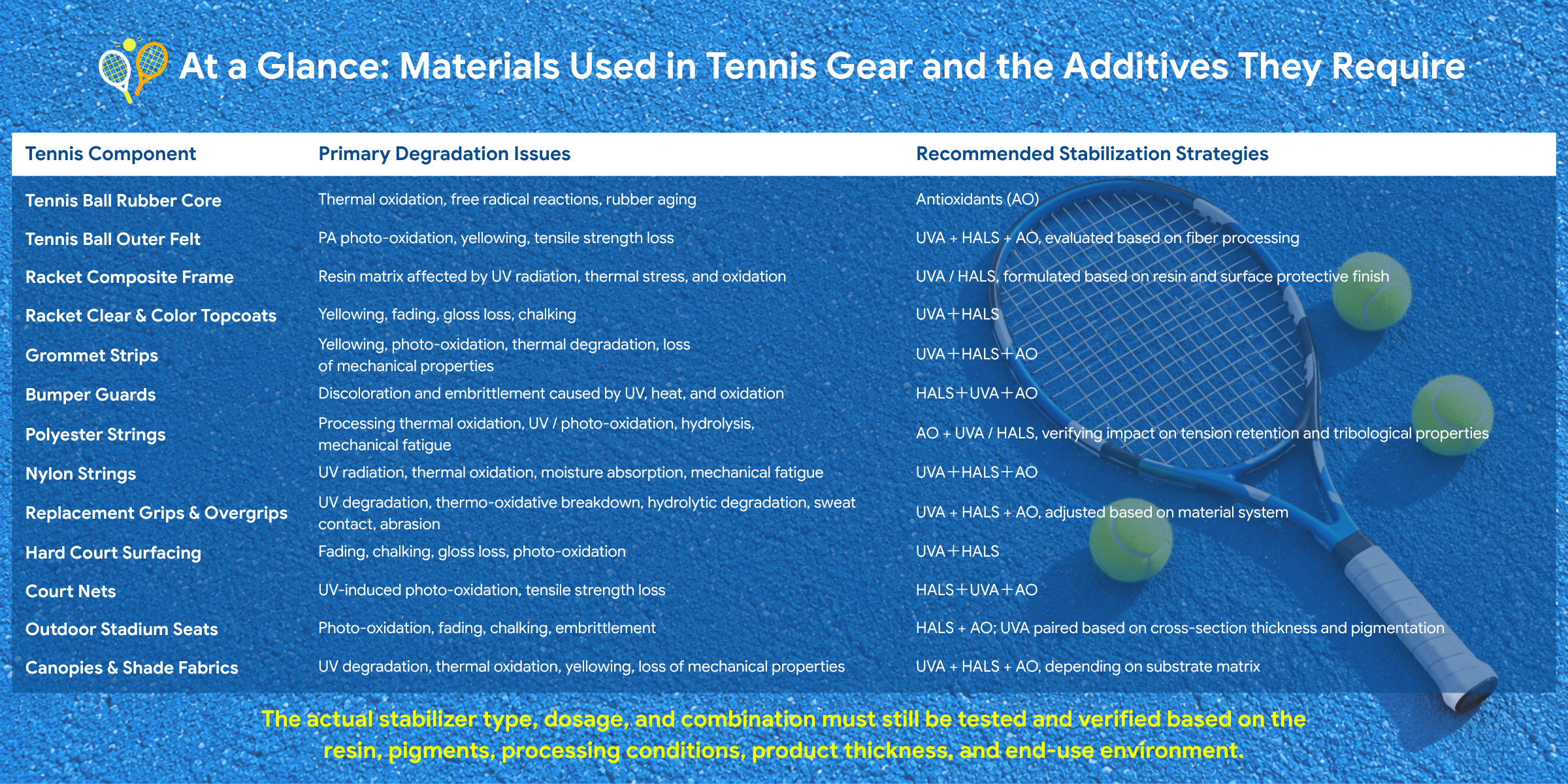
| Tennis Component | Common Material / Material System | Primary Function | Primary Degradation Issues | Recommended Stabilization Strategies |
|---|---|---|---|---|
| Tennis Ball Rubber Core | Natural rubber (NR), polybutadiene rubber (BR), and proprietary rubber compounds | Elasticity, rebound resilience, gas retention | Thermal oxidation, free radical degradation, rubber aging; pressure retention and gas permeation in pressurized balls | Antioxidants (AO); evaluate light stabilization if notable UV exposure occurs |
| Tennis Ball Outer Felt | Wool + polyamide (PA) fiber blend | Abrasion resistance, frictional grip, aerodynamic flight control | Mechanical wear, contamination; synthetic fibers risk photo-oxidation, yellowing, and tensile strength loss | Tailored UVA, HALS, and AO based on fiber type and spinning process |
| Racket Composite Frame | Carbon fiber + epoxy resin composites | High tensile strength, structural rigidity, lightweighting | Resin matrix susceptibility to UV radiation, thermal stress, and oxidation | UVA / HALS formulated for the resin matrix and surface protective finish |
| Racket Clear & Color Topcoats | Polyurethane (PU), acrylic, and specialty coating systems | Surface protection, vibrant coloration, gloss aesthetics | Yellowing, color fading, gloss loss, chalking, photo-oxidation | UVA + HALS synergistic packages |
| Grommet Strips | PA6, PA66, TPU, and engineering plastics | String protection, mitigating friction and shearing against the frame | Yellowing, photo-oxidation, thermal degradation, loss of mechanical toughness | UVA + HALS + AO tailored to the polymer substrate |
| Bumper Guards | PA, TPU, and high-impact engineering plastics / elastomers | Frame impact and abrasion protection | UV-, heat-, and oxygen-induced discoloration, embrittlement, structural breakdown | UVA / HALS / AO selected according to polymer molecular structure |
| Polyester / Co-polyester Strings | Polyester and co-polyester monofilaments | Tension retention, durability, directional control | Tension loss, mechanical fatigue, inter-string friction/notching, processing thermal stress, photo-aging | AO + UVA / HALS, verifying compatibility with elongation and tribological properties |
| Synthetic Gut / Nylon Strings | PA6, PA66, and related polyamides | Elasticity, flexibility, crisp impact feel | UV radiation, thermal oxidation, moisture absorption, dynamic tension drop, mechanical fatigue | UVA + HALS + AO |
| Replacement Grips & Overgrips | PU, TPU, TPE, elastomers, and nonwoven substrates | Non-slip tackiness, sweat absorption, shock cushioning | UV degradation, thermo-oxidative breakdown, hydrolytic degradation, sweat/oil contact, abrasion | Formulated UVA, HALS, and AO suited to the elastomer chemistry |
| Outdoor Hard Court Surfaces | Acrylic, polyurethane, and resinous multilayer coating systems | Surface coloration, skid resistance, wear resistance | Fading, loss of gloss, surface chalking, photo-oxidation, mechanical scuffing | UVA + HALS designed for waterborne or high-solids exterior coatings |
| Court Nets | PE, PP, PET, and PA braided/twisted filaments | High tensile strength, all-weather durability | UV-induced photo-oxidative degradation, rapid loss of breaking strength | High-molecular-weight HALS, UVA, and process AO |
| Outdoor Stadium Seats | PP, HDPE, and polyolefin copolymer compounds | Structural load-bearing, impact resistance, lightweight durability | Photo-oxidation, chalking, fading, cracking, severe embrittlement | HALS + AO base; UVA added based on cross-section thickness and pigmentation |
| Canopies & Shade Fabrics | PVC-coated fabrics, PET architectural membranes, PU coatings | Sun shading, all-weather barrier | UV degradation, thermal-oxidative breakdown, yellowing, loss of mechanical tear resistance | UVA, HALS, and AO tailored to the polymer substrate and flame-retardant package |
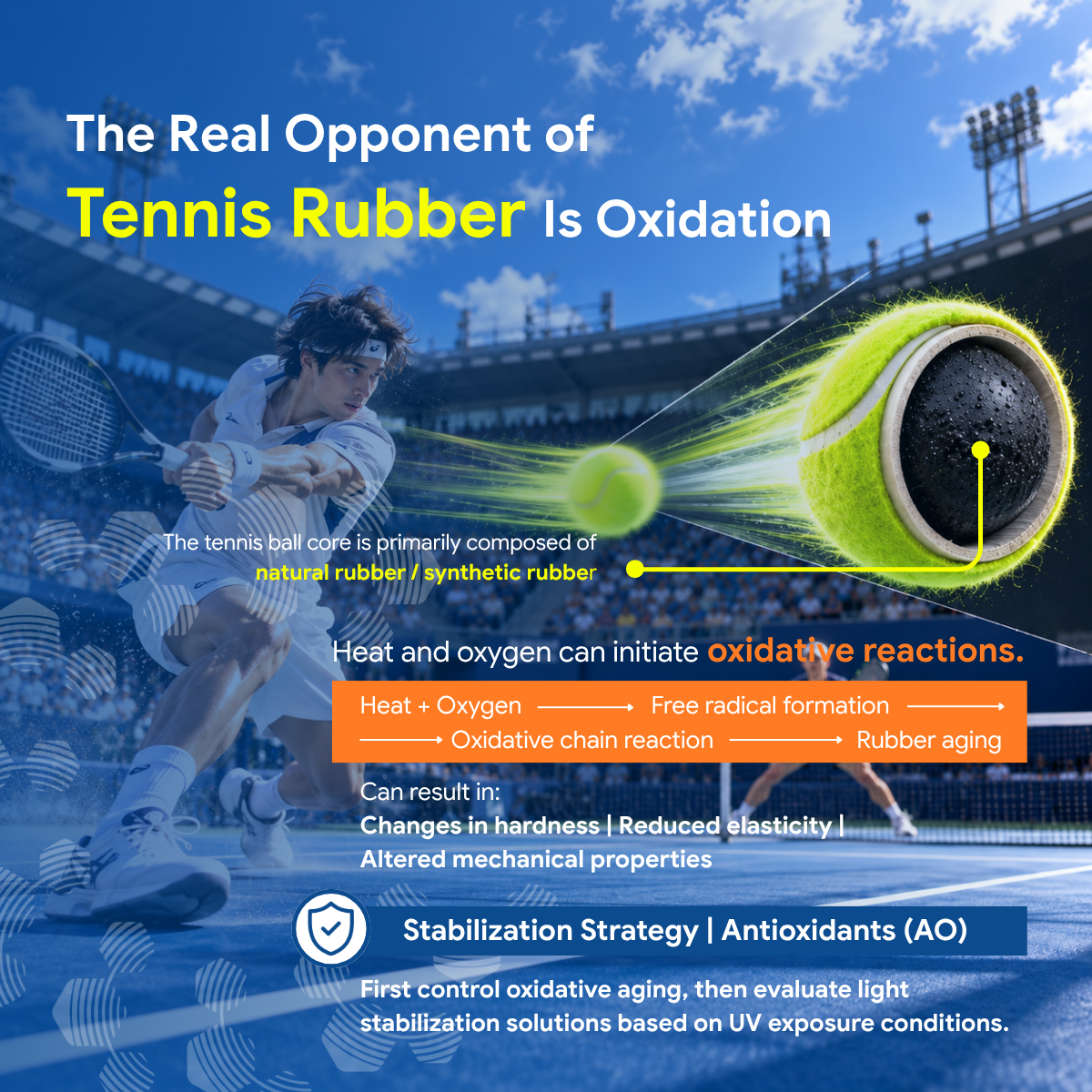
Let's begin with the heart of the game—the tennis ball.
A tennis ball core is not standard commodity plastic; it is molded from a specialized compound of natural rubber (NR), polybutadiene rubber (BR), and synthetic elastomers, wrapped in an outer woven felt.
Resilience and consistent rebound are the most critical performance criteria for this rubber core.
However, throughout manufacturing, storage, and active play, the rubber matrix is constantly exposed to thermal stress and atmospheric oxygen. Oxidative degradation initiates free radicals that propagate autoxidative chain reactions, permanently altering the macromolecular backbone and sulfur cross-linking networks:
Consequently, rubber formulations require an optimized antioxidant (AO) package.
Solution: Antioxidants (AO)
Antioxidants scavenge peroxy and alkoxy radicals to interrupt oxidation cycles, shielding the compound during compounding, vulcanization, and ambient shelf life.
For pressurized tennis balls, performance retention goes beyond standard oxidation.
Internal pressurized gas gradually permeates through the rubber core over time, degrading rebound vitality. Gas barrier performance, cross-link density stability, and fatigue recovery are equally vital formulation parameters.
If the rubber core or associated bonding adhesives undergo prolonged direct sunlight, targeted UVA or HALS packages should be introduced based on real-world exposure levels.
Stabilizing tennis ball elastomers is therefore never just about "adding an anti-UV chemical"; it requires holistically engineering the synergy between oxidative stability, elastomeric retention, and gas impermeability.
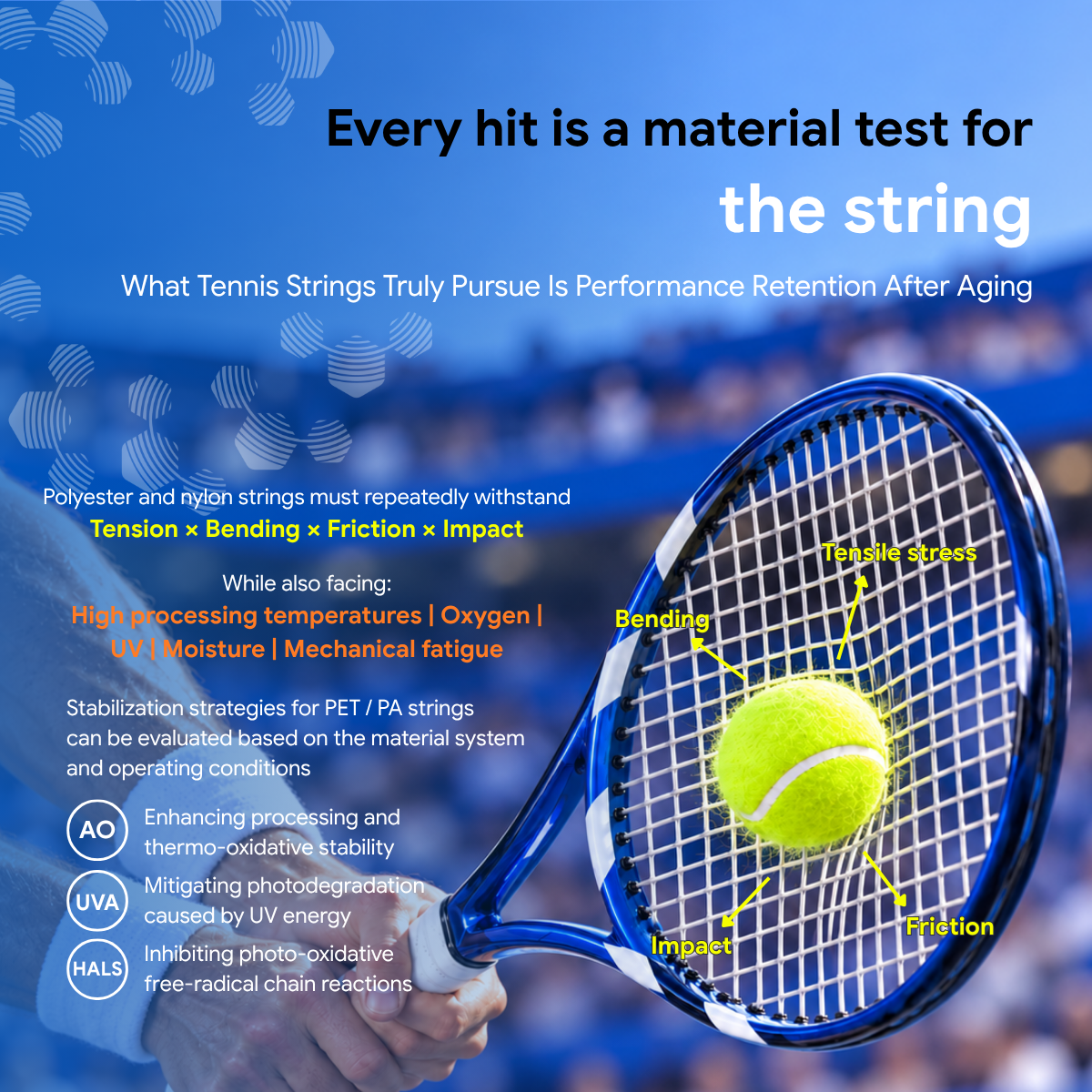
Monofilament polyester and co-polyester strings represent the gold standard in modern competitive tennis.
They are celebrated for high durability, low friction, and exceptional ball-pocketing and spin control.
Yet from a materials science perspective, a string operates under severe, dynamic mechanical fatigue.
Every strike generates simultaneous:
Tension + Flexure + Surface Friction + Dynamic Impact
As match play continues, strings face tension creep, molecular fatigue, and inter-string friction notching.
Polyester strings undergo high-temperature melt extrusion and orientation drawing during production, making thermal-oxidative stability indispensable to avoid polymer chain degradation and molecular weight loss.
For prolonged outdoor matches, UV radiation and photo-oxidation represent additional degradation pathways.
Solution: AO + Light Stabilization Systems
Depending on the specific co-polyester grade and processing line conditions, formulators typically evaluate:
Antioxidants (AO)
→ Protect against melt processing degradation and long-term thermo-oxidative stress.
UV Absorbers (UVA)
→ Filter harmful ultraviolet wavelengths, preventing photon-induced chain cleavage in the polymer matrix.
Hindered Amine Light Stabilizers (HALS)
→ Intercept photo-induced free radicals, terminating the degradation cycle.
Because string playability depends entirely on precise mechanical response, performance cannot be gauged by weathering test panels alone.
Following additive incorporation, engineers must rigorously benchmark:
Tension maintenance, tensile modulus, elongation at break, dynamic friction coefficients, and impact notch endurance.
The ultimate objective in string formulation is not simply adding high additive loadings, but rather:
Ensuring the string maintains its designed mechanical playability even after intensive environmental aging.
Polyamides (PA), commonly known as nylon, serve as quintessential engineering thermoplastics across tennis equipment. Applications range from synthetic gut multifilament strings to structural racket grommet strips, predominantly utilizing PA6, PA66, or modified PA copolymers.
Polyamides provide exceptional mechanical modulus, impact toughness, and vibration damping under cyclic loading.
Yet, polyamides are notoriously prone to environmental degradation.
Prolonged UV radiation accelerates photo-oxidation along the amide linkage, manifesting as:
Severe yellowing, surface discoloration, polymer chain scission, and marked drop in mechanical elongation.
Furthermore, high thermal profiles during injection molding or filament spinning demand superior melt stability, while the natural hygroscopic behavior of polyamides complicates dimensional stability and dynamic stiffness.
Solution: UVA + HALS + AO
For weatherable polyamide formulations, a three-pillar stabilization architecture is standard:
UVA
Shields the polymer bulk by filtering destructive UV wavelengths before excitation occurs.
HALS
Catalytically scavenges free radicals generated during photo-oxidation.
AO
Safeguards the polymer melt during extrusion/molding and mitigates long-term thermal oxidation.
Because grommet strips endure repeated string contact and high shear friction alongside sun exposure, aesthetic color stability must be matched with ductile toughness retention.
Accelerated weathering protocols must therefore cross-examine tensile retention, Charpy notched impact, yellowness index (ΔYI), and mechanical fatigue before and after exposure.
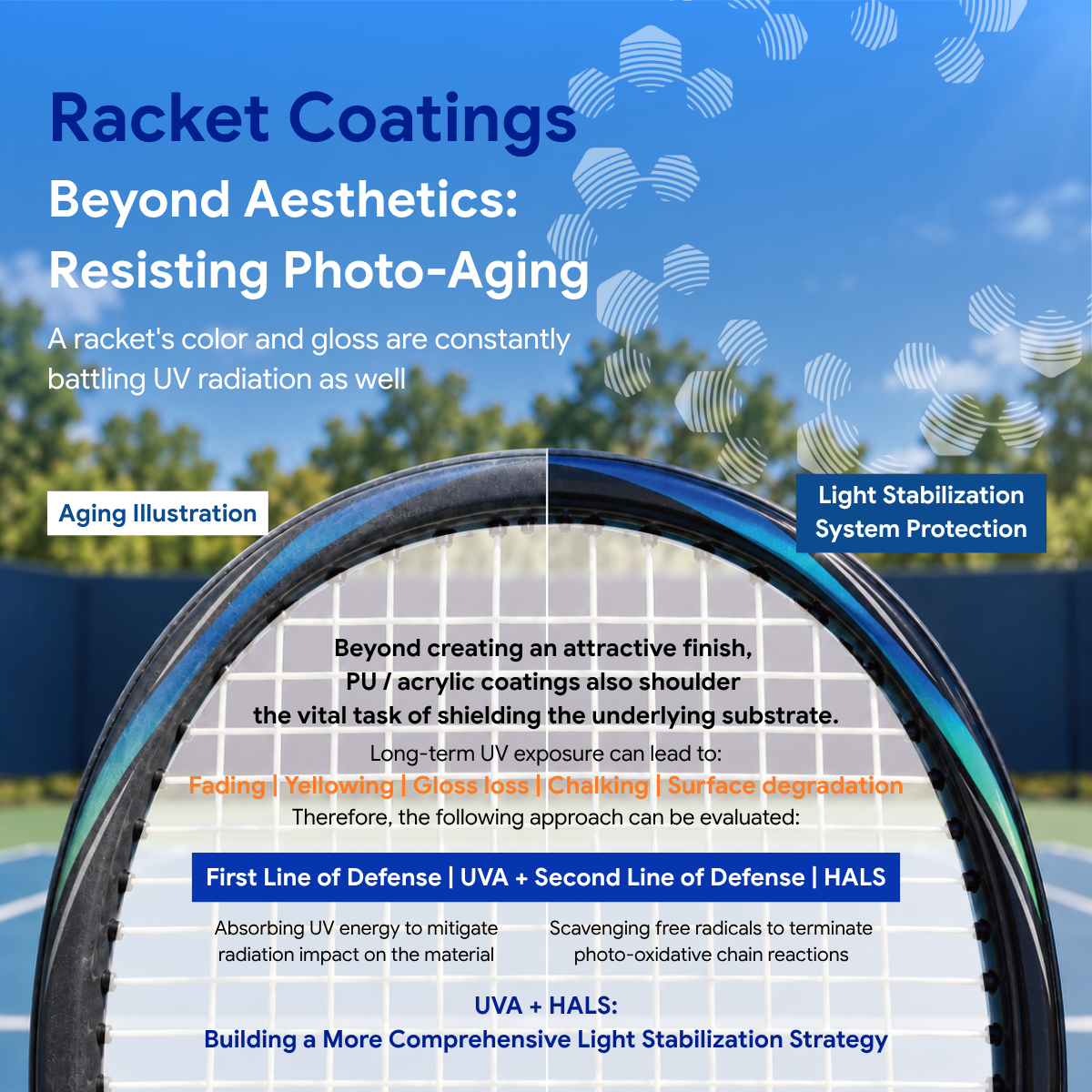
While modern racket frames rely on carbon fiber and epoxy matrix composites for structural performance, consumer experience is governed by the exterior coating system.
Racket finishes utilize polyurethane (PU), acrylics, or hybrid topcoat formulations.
These coatings not only define branding, vibrant hues, and gloss finishes, but also form the first environmental barrier protecting the structural composite substrate below.
When topcoats face UV radiation, oxygen, and atmospheric humidity, degradation shows up as:
Fading, yellowing, micro-cracking, gloss loss, chalking, and film embrittlement.
Coating systems represent the classic showcase for synergistic UVA and HALS protection.
Solution: UVA + HALS
UV Absorbers (UVA) act as internal filters, absorbing high-energy UV radiation and dissipating it harmlessly as thermal energy to shield both the clearcoat and underlying basecoat/substrate.
Because UV absorption alone cannot capture every active radical species, formulators incorporate Hindered Amine Light Stabilizers (HALS).
HALS neutralizes free radicals via a continuous regenerative catalytic cycle (the Denisov cycle), arresting photo-oxidative propagation.
Therefore:
UVA + HALS Synergy
This combination pairs two distinct photochemical defense mechanisms rather than simply increasing the loading of a single stabilizer.
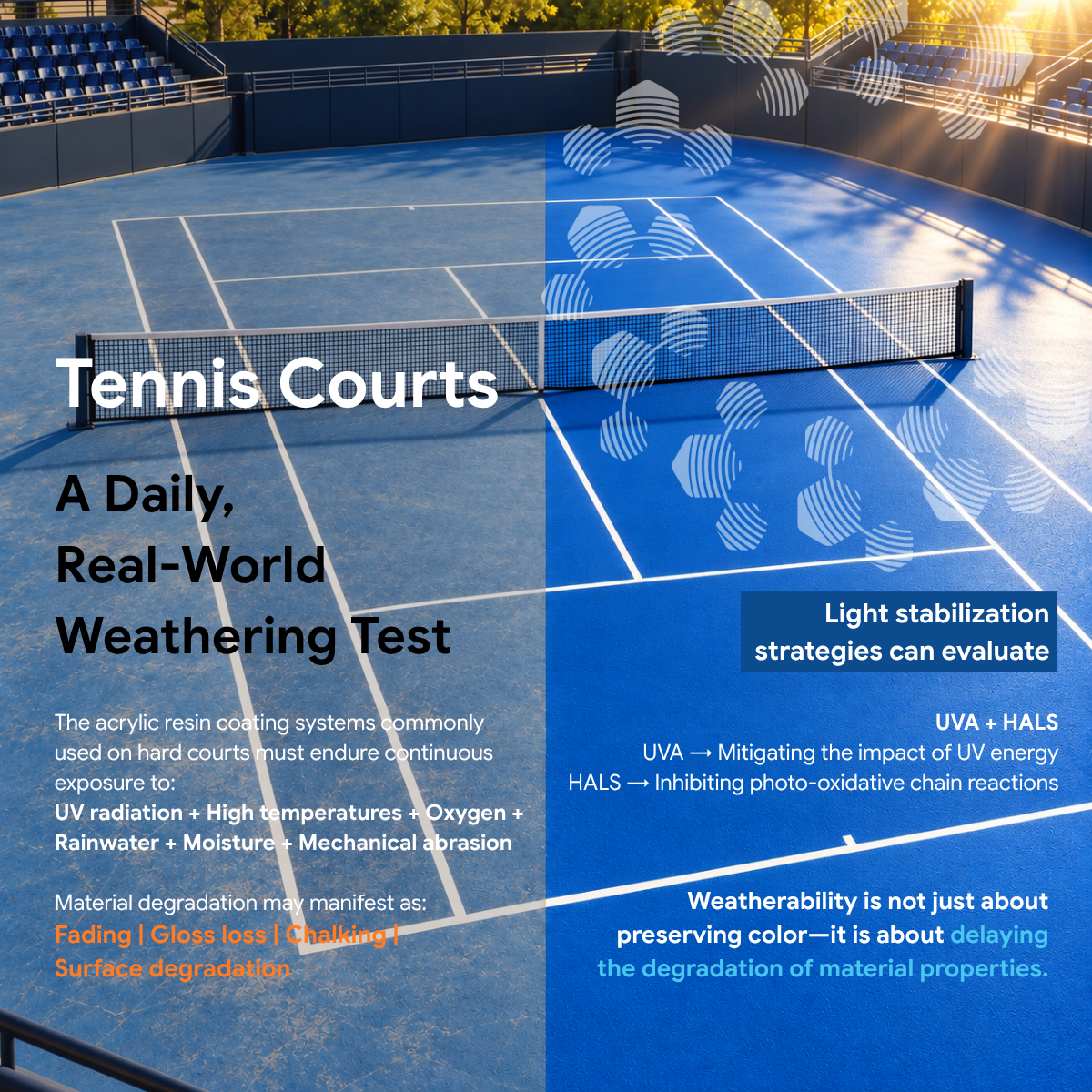
The 2026 Laver Cup at London's The O2 took place on an indoor hard court.
Evaluating long-term UV weathering requires shifting focus to exterior tennis courts.
Outdoor hard-court surfacing relies on multi-layer acrylic, polyurethane, or hybrid polymer resin coatings applied over asphalt or concrete substrates.
Unlike sheltered indoor venues, outdoor court systems face severe, continuous outdoor exposure:
UV Radiation + Elevated Temperatures + Atmospheric Oxygen + Rainwater + Humidity + High Mechanical Abrasion
Combined UV and oxygen exposure drives rapid photo-oxidation across the polymer resin, leading to:
Color shifting, gloss loss, surface chalking, film erosion, and binder matrix micro-fissuring.
Solution: UVA + HALS
For high-performance exterior court systems, light stabilization packages must be optimized for the specific resin binder, color pigments, and filler loadings:
Concurrently:
A tailored UVA + HALS synergy remains an essential stabilization strategy for long-life outdoor court coatings.
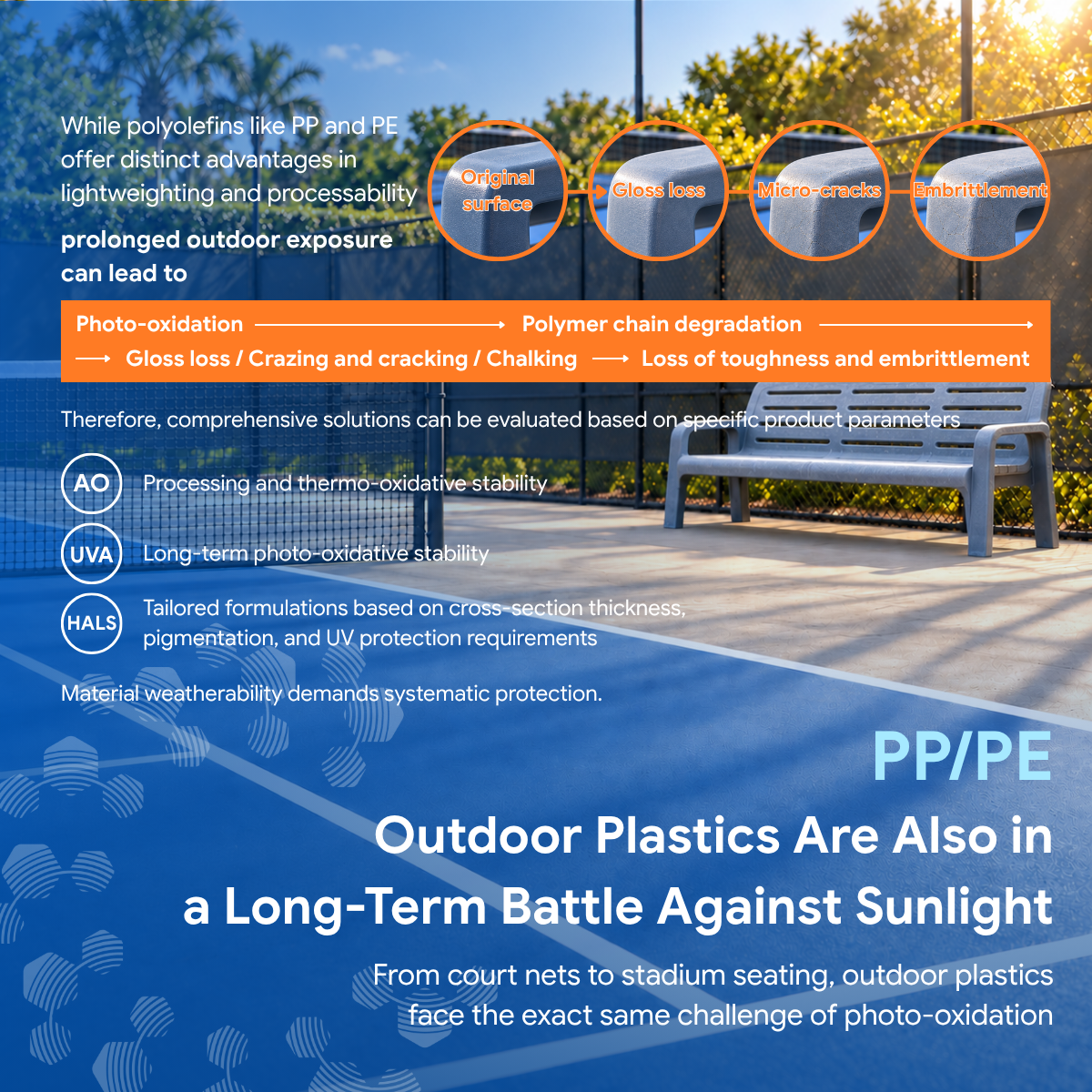
Expanding the focus further reveals stadium seating, court perimeter netting, and plastic fixtures across tennis facilities.
Many of these structural components are molded or extruded from polypropylene (PP) or polyethylene (PE).
Polyolefins are celebrated for lightweighting, processing ease, chemical resistance, and cost-to-performance balance.
However, untreated polyolefins are highly vulnerable to photo-oxidation under direct sunlight.
In polypropylene, tertiary carbon sites accelerate free radical formation under UV exposure, driving rapid polymer degradation:
Solution: HALS + AO, with UVA as Formulated
For exterior PP/PE applications, Hindered Amine Light Stabilizers (HALS) serve as the primary defensive barrier.
HALS effectively halts radical propagation within the polyolefin matrix.
Because polyolefins undergo high shear and thermal strain during pelletizing and final molding, an antioxidant system is also critical:
AO → Processing melt stability and thermal-oxidative protection.
HALS → Long-term photo-oxidative weathering defense.
UVA → Added based on part cross-section thickness, pigmentation (organic vs. inorganic), and UV shielding requirements.
Stabilizing exterior polyolefins requires formulating a holistic processing and light stability package matched to the final operating climate, rather than looking for a generic "anti-UV additive."
Distinct Polymers Demand Differentiated Stabilization Strategies
Deconstructing tennis equipment and court infrastructure confirms an essential rule in materials engineering:
UVA, HALS, and Antioxidants are not interchangeable additives.
Each addresses distinct phases, temperatures, and pathways of polymer degradation.
| Polymer Substrate | Representative Tennis Application | Dominant Degradation Risk | Primary Stabilization Pathway |
|---|---|---|---|
| Natural / Synthetic Rubbers | Tennis Ball Core | Thermal oxidation, elastomeric fatigue, aging | Primary/Secondary AO; add light stabilizers if exposed to sunlight |
| Polyester / Co-polyester | Monofilament Strings | Dynamic tension loss, fatigue, melt degradation, photo-aging | Processing AO + UVA / HALS based on service conditions |
| PA6 / PA66 (Polyamides) | Synthetic Gut Strings, Grommets | Yellowing, photo-oxidation, thermal breakdown, moisture stress | UVA + HALS + Process AO |
| PU / Acrylic Topcoats | Racket Protective Coatings | Fading, yellowing, gloss loss, chalking | UVA + HALS synergy |
| Acrylic / PU Systems | Outdoor Hard Court Surfaces | Fading, gloss reduction, binder chalking, mechanical scuffing | Tailored UVA + HALS |
| PP / PE (Polyolefins) | Stadium Seating, Netting, Hardware | Photo-oxidation, tensile loss, crazing, embrittlement | HALS + AO foundation; UVA added per cross-section thickness |
| TPU / TPE (Elastomers) | Overgrips, Bumper Guards | Photo-oxidation, thermal aging, sweat-induced hydrolysis | UVA + HALS + AO selected by elastomer backbone chemistry |
True Additive Solutions Begin at the Polymer Level
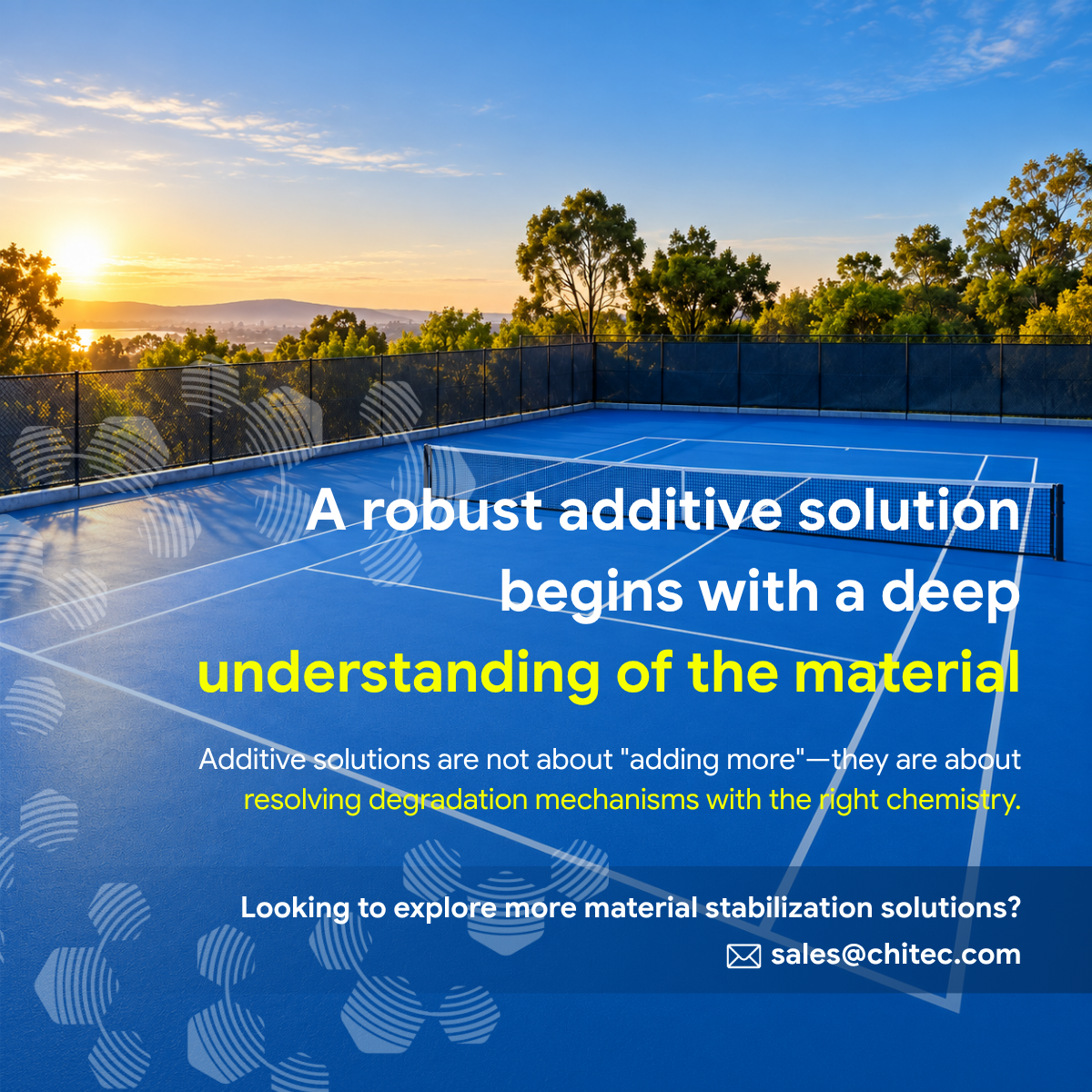
As elite tournament play illustrates, developing effective material stabilization never starts with the simplistic question:
"Which UV additive should we add to our outdoor product?"
A thorough engineering approach begins with the base polymer and its specific failure pathways:
Is the substrate Polyester, PA, PP, PE, PU, Acrylic, TPU, TPE, or an Elastomeric Rubber?
Every polymer possesses a distinct molecular architecture, dictating its fundamental degradation behavior under light, heat, and oxygen.
Does failure stem from:
- • Melt processing thermal degradation?
- • Long-term service thermal oxidation?
- • Direct UV-induced photo-scission?
- • Photo-oxidative free radical chain propagation?
- Or mechanical fatigue, hydrolysis, moisture absorption, or chemical exposure?
Identifying the root cause of failure is essential to selecting the right stabilization chemistry.
When direct UV light absorption drives failure:
UV Absorbers (UVA)
When long-term photo-oxidative radical propagation dominates:
Hindered Amine Light Stabilizers (HALS)
When degradation occurs during high-temperature compounding or thermal service life:
Antioxidants (AO)
For components engineered for demanding exterior environments, real stabilization rarely means overdosing a single molecule. It requires formulating across:
Polymer Architecture × Processing Profile × Wall Thickness × Pigment Matrix × Service Environment × Design Lifetime
This allows formulators to deploy optimized AO, UVA, and HALS chemistries—individually or in synergistic blends.
From high-speed tennis balls and impact-resistant rackets to all-weather outdoor court systems, every polymer component experiences a unique degradation pathway.
True performance stabilization never comes down to:
"Adding more."
It means:
Diagnosing why a polymer degrades, and resolving it with the right chemical stabilization mechanism.
Looking to optimize antioxidant and light stabilization systems across your polymer formulations?
Connect with the technical and business team at Chitec:
sales@chitec.com
建議您使用以下瀏覽器觀看本網站,
要下載瀏覽器,請直接點擊以下:以獲得最佳瀏覽效果。