
How Chitec Builds More Durable Artificial Turf Systems with Polymer Stabilization
Natural Grass for FIFA World Cup Fields, but Durable Artificial Turf for Everyday Venues
Every FIFA World Cup, fans around the world focus on the players, tactics, and spectacular goals. However, stadium managers care about something different: the quality of the turf under the players' feet.
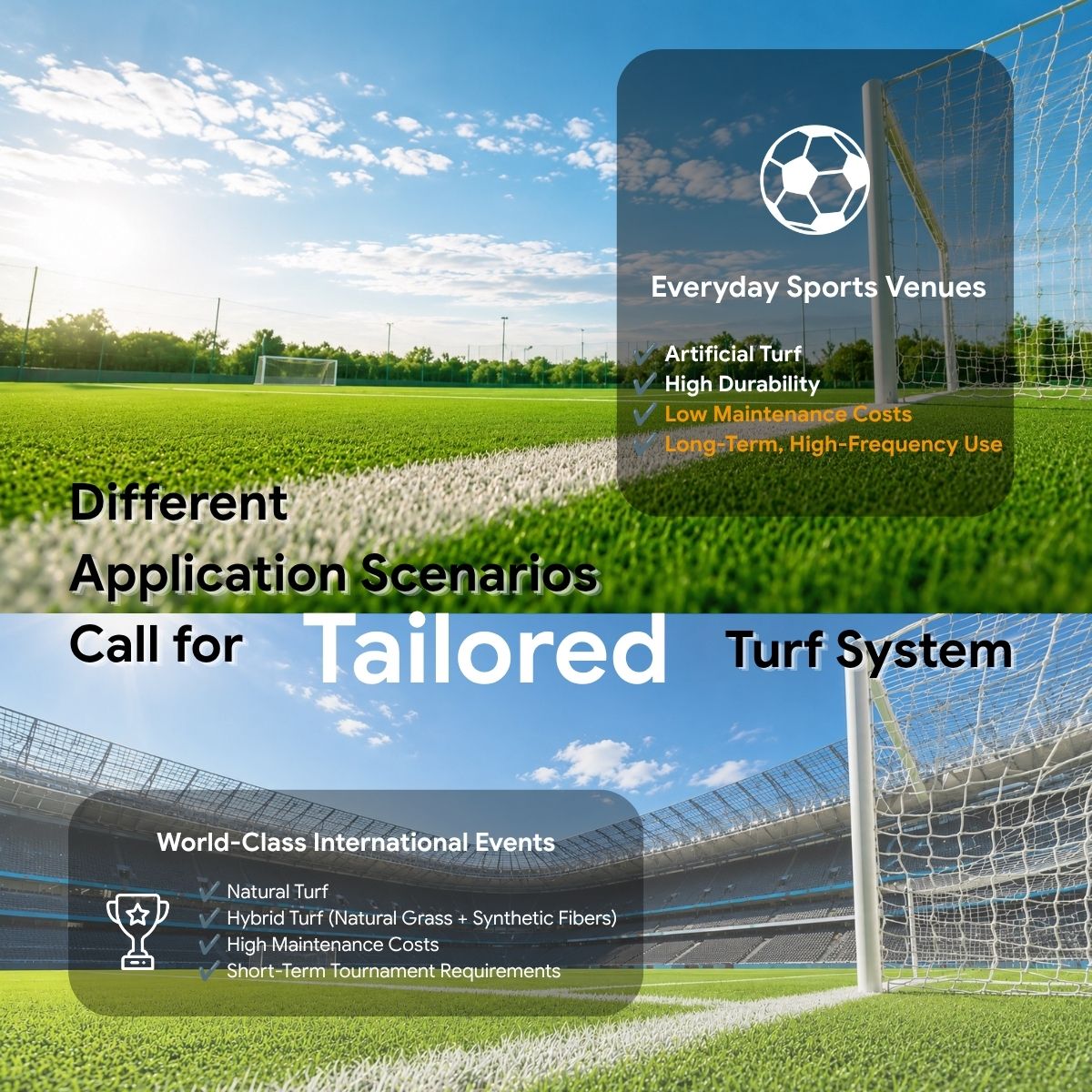
Take the 2026 FIFA World Cup as an example. All official match venues must use natural grass or natural-synthetic hybrid turf systems. Some major North American stadiums that originally had artificial turf must tear it out and lay down temporary natural grass just to meet FIFA's strict tournament standards.
To deliver international-grade natural grass, stadium operators invest heavily in turf cultivation, complex irrigation, advanced drainage, rapid transport, specialized maintenance crews, and post-tournament restoration—all for a short window of optimal play.
However, this high-maintenance model is simply not practical for the vast majority of sports and community venues.
School athletic fields, community parks, local training centers, and commercial landscape areas need a turf system that can handle continuous foot traffic, minimize maintenance costs, and resist long-term weathering.
Therefore, artificial turf is not just a cheap substitute for natural grass—it is a highly engineered materials science solution. The true service life of artificial turf is determined not by how the grass fibers look on day one, but by how well the underlying polymers maintain their mechanical properties under relentless UV exposure, high heat, moisture, and physical wear.
For turf manufacturers, the real challenge is not simply choosing a standard PE resin, but designing a comprehensive polymer stabilization system that protects the material from compounding and extrusion all the way through years of harsh outdoor exposure.
Artificial Turf: A Multi-Layered Polymer Engineering System
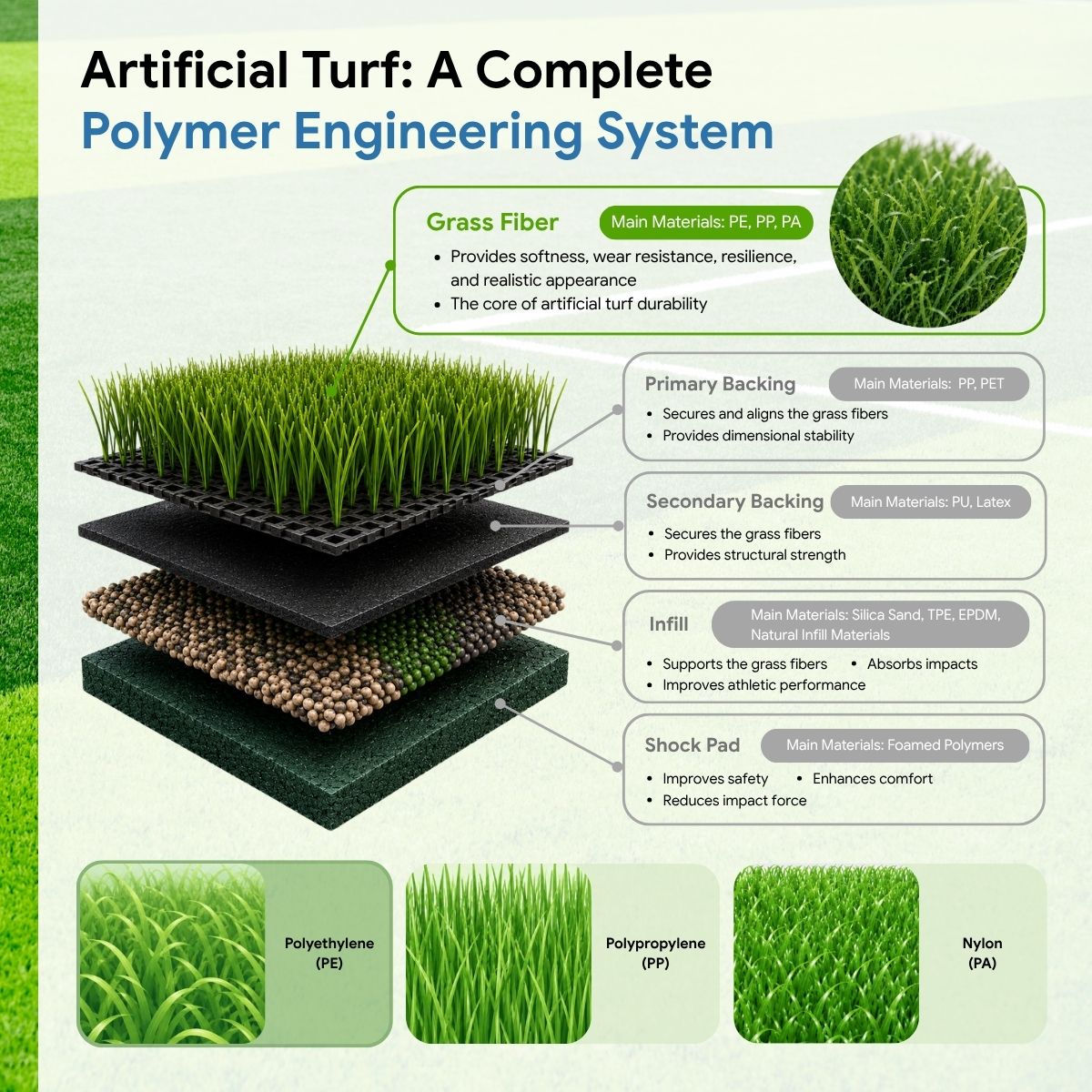
Artificial turf is not a single material; it is a complex assembly of multiple polymers and functional layers, each designed for a specific task.
| Structure | Common Materials | Primary Function |
|---|---|---|
| Grass Fiber (Yarn) | PE, PP, PA (Nylon) | Provides softness, wear resistance, resilience, and realistic appearance |
| Primary Backing | PP, PET | Secures and aligns the tufted grass fibers |
| Secondary Backing | PU, Latex | Locks the grass fibers in place and provides structural integrity |
| Infill | Silica Sand, TPE, EPDM, Natural Organics | Supports the fibers upright and absorbs physical impacts |
| Shock Pad | Polymer Foam | Improves G-max ratings, safety, and player comfort |
Among these components, the Grass Fiber (Yarn) is the most vulnerable to the elements and dictates the overall lifespan of the turf.
Directly exposed to sunlight, rain, oxygen, heat, and constant physical friction, the grass yarn bears the brunt of environmental stresses. If the fibers degrade, embrittle, or break off, the entire turf system fails—even if the backing and adhesive remain perfectly intact.
This makes artificial turf performance a classic exercise in polymer weatherability engineering.
Modern turf fibers are primarily made of Polyethylene (PE), Polypropylene (PP), or Polyamide (PA / Nylon). While all three can be used, their differing mechanical profiles and processability make them suitable for different designs.
PE is the dominant choice for sports turf because of its superior softness, low friction coefficient, and excellent resilience, offering a feel closest to natural grass. PP is stiffer and more cost-effective, commonly used for landscaping or as a curly "thatch layer" to support the straight PE blades. PA (Nylon) offers exceptional mechanical strength and wear recovery, but its high cost and tendency to absorb moisture (hydrophilicity) limit its use to niche, high-wear applications.
Ultimately, the global sports turf market relies overwhelmingly on PE grass fibers.
The Main Enemy of PE is Not Wear, But Outdoor Photo-Oxidation
As a polyolefin, polyethylene's carbon-hydrogen backbone is highly susceptible to the combined effects of UV radiation, atmospheric oxygen, and elevated outdoor temperatures.
When PE absorbs high-energy UV photons, the covalent carbon-carbon (C-C) and carbon-hydrogen (C-H) bonds in the polymer chain undergo homolytic cleavage. This generates highly reactive carbon-centered free radicals. These radicals react instantly with oxygen to form peroxy radicals, initiating an auto-catalytic degradation loop. As the polymer chains repeatedly scissor, molecular weight drops, causing the yarn to lose its initial toughness and elasticity.
This degradation process is progressive and leads to several visible and functional failures over time:
- Color fading and loss of aesthetic appeal
- Fiber embrittlement
- Surface micro-cracking
- Drop in tensile strength
- Loss of pile recovery (fibers remain matted)
- Yarn splitting and fibrillation
Crucially, turf degradation is synergistic. UV light initiates the radical reactions, heat accelerates the rate of oxidation, and constant player foot traffic acts as a mechanical stress that propagates the micro-cracks, leading to premature fiber breakage.
For turf manufacturers, the key to durability is not just sourcing high-grade PE resins, but designing a robust polymer stabilization package that protects the material during processing and throughout its service life.
Building a Comprehensive Polymer Stabilization Package
For artificial turf, UV exposure is the catalyst for aging.
From the high-heat melt extrusion stage to years of outdoor field deployment, the polymer is constantly bombarded by UV light, heat, oxygen, and moisture. These factors do not act in isolation; they work together to accelerate degradation, ruining the yarn's mechanical integrity and resilience.
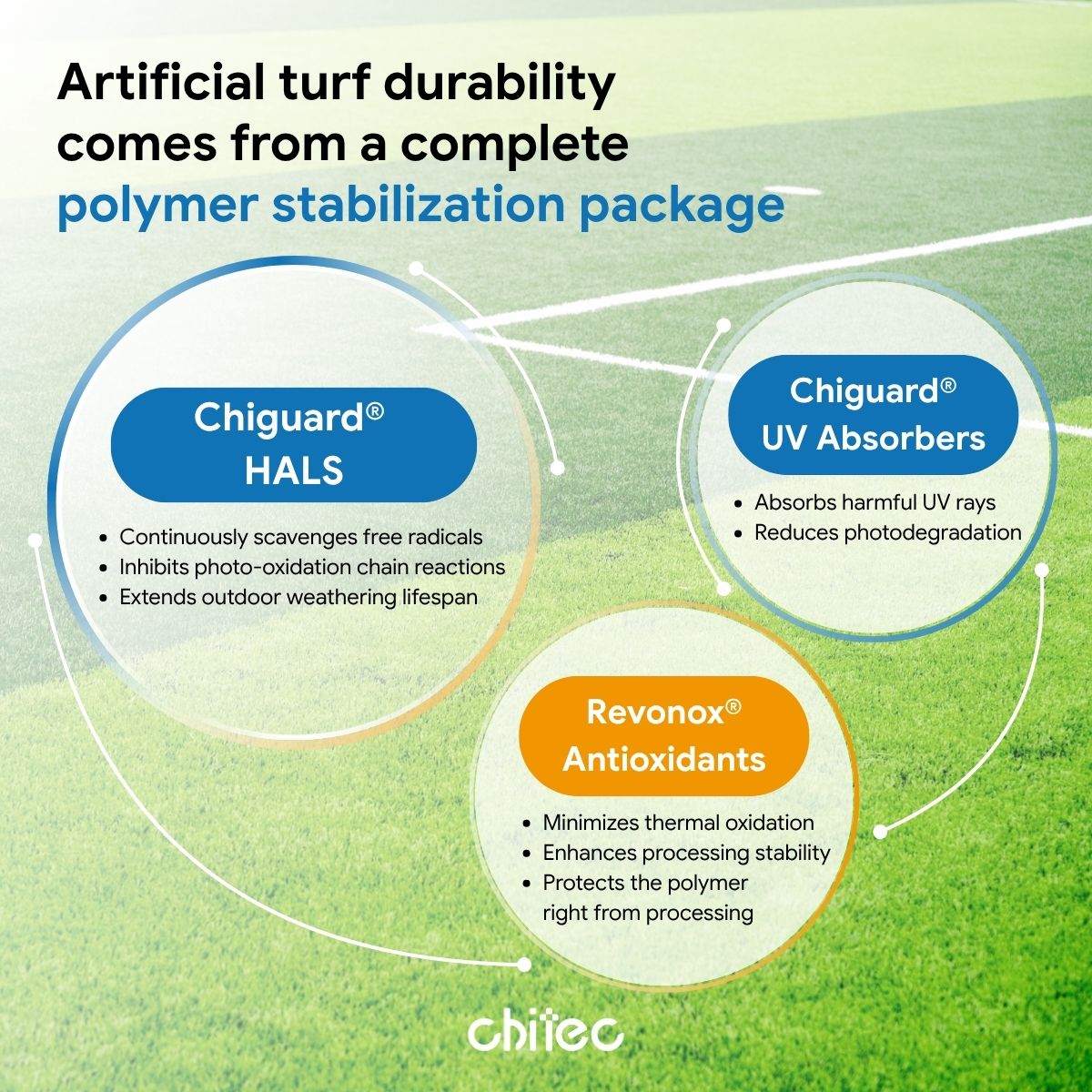
Because of this, turf manufacturers cannot rely on a single "silver bullet" additive. They need a balanced stabilizer package that ensures melt processing stability, long-term weatherability, and robust physical properties.
In polyolefin turf formulations, different stabilizer classes play distinct, complementary roles:
- Revonox® Antioxidants: Prevent thermal-oxidative degradation during high-heat compounding and extrusion, protecting the polymer's initial molecular weight and melt flow index.
- Chiguard® HALS (Hindered Amine Light Stabilizers): Continuously scavenge free radicals and terminate the photo-oxidation chain reaction. This is the core technology behind long-term outdoor survival.
- Chiguard® UV Absorbers (UVAs): Filter out harmful UV photons, preventing them from initiating photo-degradation in the first place, reducing the load on the rest of the stabilizer system.
While these three additives operate via different mechanisms, they work synergistically. However, when it comes to keeping thin turf fibers tough, elastic, and intact over a decade of outdoor exposure, the continuous scavenging action of HALS is by far the most critical factor.
Thin Turf Monofilaments Highlight the Need for HALS
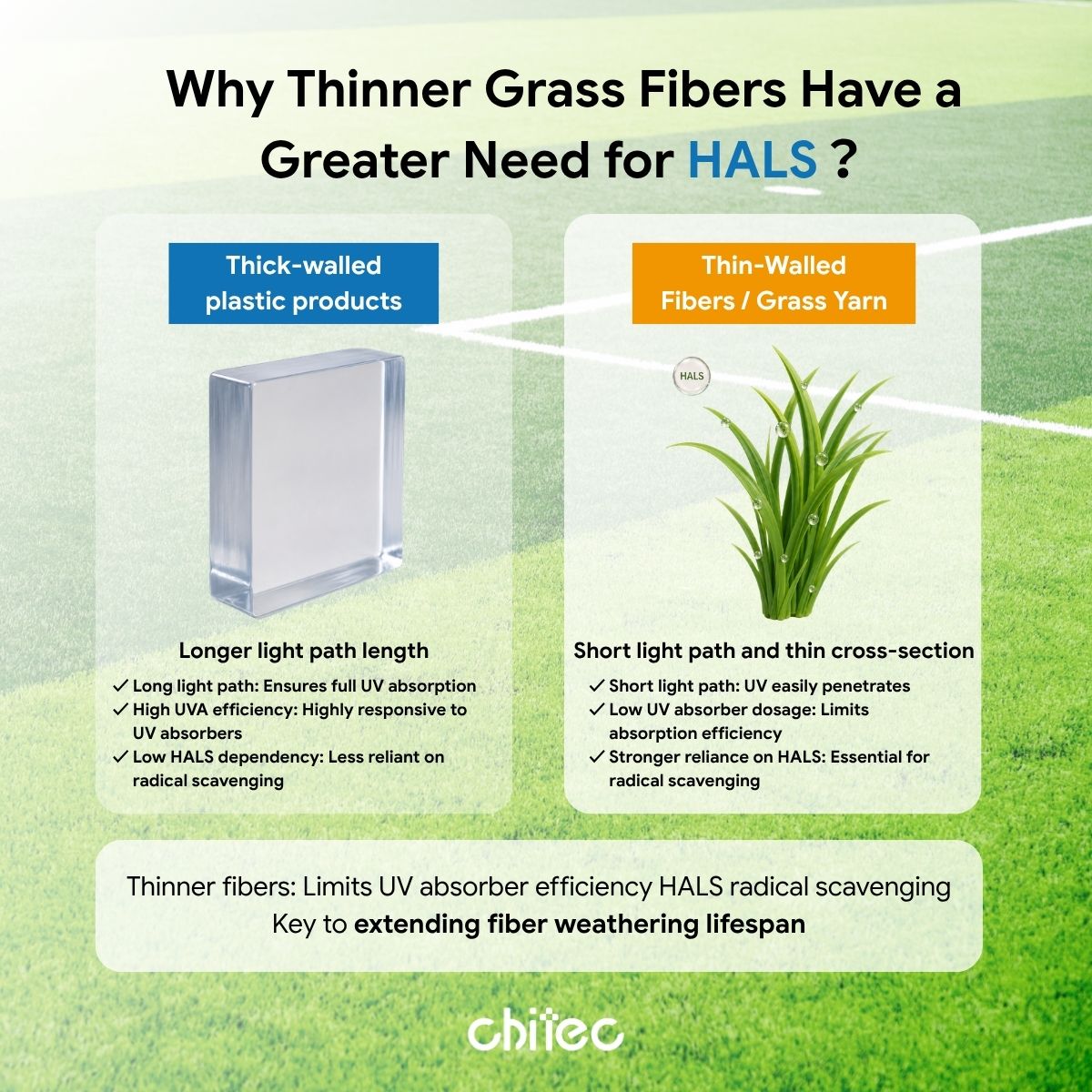
In polyolefin stabilization, UV Absorbers (UVAs) are a vital first line of defense. However, their physical performance is heavily dependent on the path length of the light and the thickness of the plastic part (governed by the Beer-Lambert law).
UVAs require a certain physical thickness to absorb UV radiation before it penetrates the deeper layers of the plastic. In thick-walled molded parts, even a low concentration of UVA can provide highly effective surface and depth protection.
In contrast, artificial turf fibers are highly oriented, thin-walled monofilaments. Because they are so thin, UV light easily penetrates the entire cross-section of the fiber. Under these conditions, relying on UV absorbers alone is simply not enough.
This is why Hindered Amine Light Stabilizers (HALS) are the indispensable core of turf weatherproofing.
Unlike UVAs, HALS do not absorb UV light. Instead, they act as chemical scavengers that capture alkyl and peroxy radicals immediately after they form, preventing the chain reaction that breaks down polymer molecules and ruins mechanical properties.
What makes HALS uniquely powerful is the Denisov Cycle—a closed-loop regeneration mechanism. HALS are not consumed in a single reaction; they continuously regenerate, allowing a single stabilizer molecule to scavenge free radicals over and over again for years.
Thus, HALS form the backbone of turf durability. By pairing process-saving antioxidants with UV-filtering absorbers and long-lasting HALS radical scavengers, manufacturers can ensure their turf stands up to high-heat production and years of outdoor play.
A Tailored Portfolio of HALS for Diverse Turf Formulations
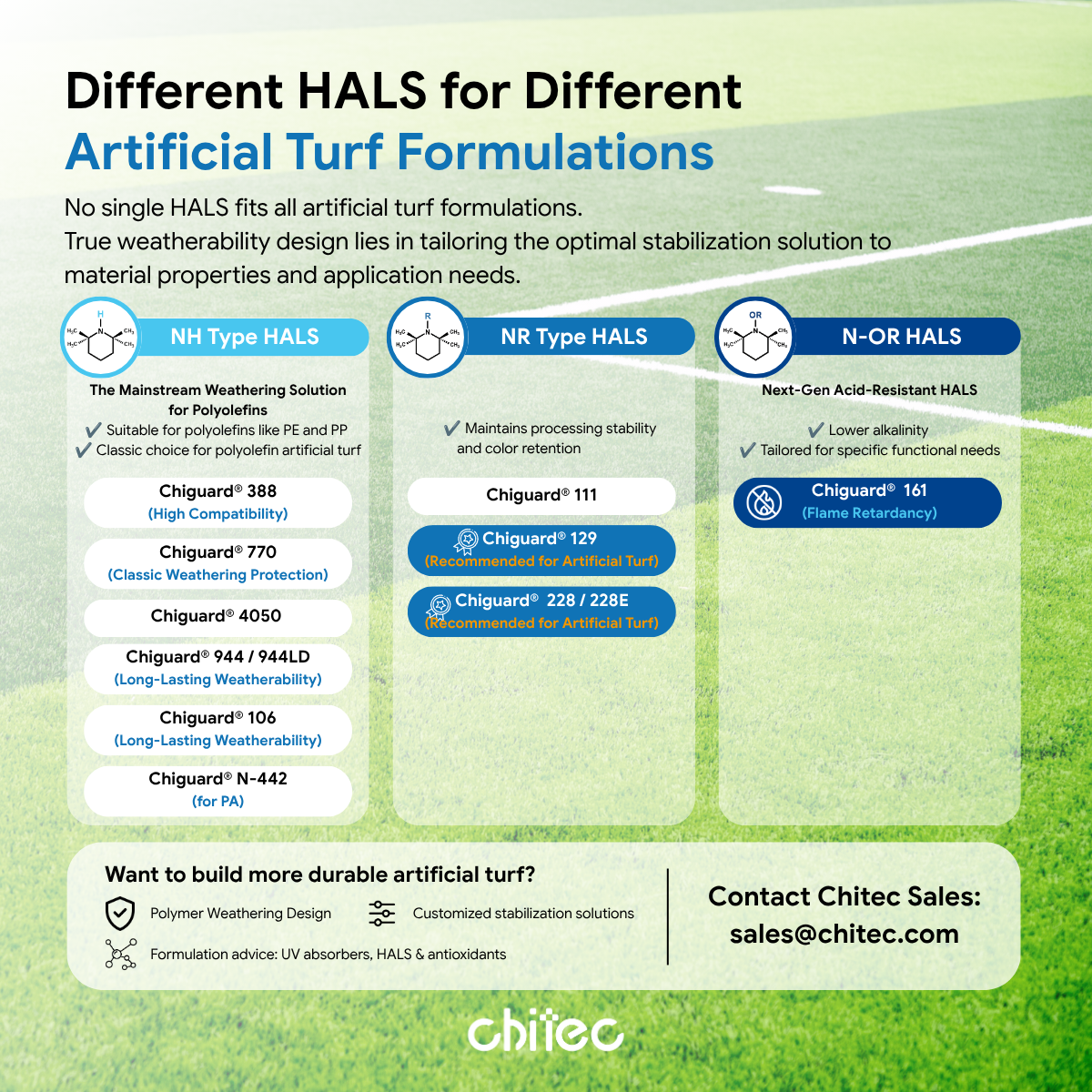
While HALS are the industry standard for artificial turf, there is no single additive that fits every application.
Turf weatherability is affected by many variables: the base polymer (such as PE or PP), resin molecular weight distribution, pigments, extrusion conditions, fiber geometry, local climate, and the presence of other additives like flame retardants or fillers. Consequently, choosing the right HALS is an exercise in custom formulation.
NH-type HALS represent the most mature and widely adopted light stabilization technology for polyolefins, performing exceptionally well in standard PE and PP formulations.
Among these, Chiguard® 770 is a globally recognized low-molecular-weight HALS that delivers highly effective, immediate surface protection—making it a classic choice for PE grass blades.
For professional sports turf exposed to intense sunlight and high temperatures, polymeric (high-molecular-weight) oligomeric HALS offer a major performance upgrade. Chiguard® 944, 944LD, and Chiguard® 106 feature extremely low volatility, excellent thermal stability, and high resistance to extraction (water leaching). This ensures they stay inside the thin fiber walls over a long service life.
Additionally, Chiguard® 4050 is designed for high-surface-area geometries, while Chiguard® 388 uses a long-chain hydrocarbon design to optimize compatibility with PE and thermoplastic polyolefins (TPOs).
Chiguard® N-442 is also suitable for nylon-based artificial turf applications.
For more demanding applications, Chiguard® 111 combines a high-molecular-weight HALS with a polymeric HALS in a synergistic blend. This combination offers excellent outdoor longevity, low migration, and outstanding resistance to extraction, making it highly effective for PE and PP turf exposed to frequent rain and washing.
Meanwhile, Chiguard® 228 / 228E is a high-molecular-weight HALS featuring superb thermal processing stability and low volatility. It protects PE and PP fibers during high-temperature extrusion and keeps them flexible outdoors. It blends seamlessly with antioxidants and UV absorbers, helping fibers resist surface micro-cracking and shedding under heavy play. Chiguard® 228 / 228E is a popular choice in the North American sports turf market for high-end, long-warranty field installations.
Where traditional HALS face chemical compatibility limits, Chiguard® 129 stands out. Designed with low basicity (low pKb) and low nucleophilicity, it avoids unwanted interactions with acid-sensitive pigments, halogenated flame retardants, or moisture-sensitive polymers like Nylon, PET, and PC (while remaining fully compatible with PE, PP, and PS). With a decomposition temperature exceeding 300 °C, Chiguard® 129 easily tolerates high-heat extrusion. Its narrow molecular weight distribution keeps the stabilizer uniformly dispersed within the fiber, preventing bloom and ensuring reliable, long-lasting radical scavenging.
For turf fibers, Chiguard® 129 stops polymer chain degradation in its tracks, preserving the yard's flexibility, recovery, and appearance even after years on a hot, sunny field.
For advanced or specialized turf applications, Chitec offers next-generation, non-basic N-OR (alkoxyamine) HALS technology.
N-OR HALS are practically non-basic, meaning they do not react with acidic chemicals or agricultural residues, while offering industry-leading UV stabilization.
A prime example is Chiguard® 161, which provides both halogen-free flame retardancy and excellent light stabilization in a single molecule. This dual-action additive is ideal for polyolefin fibers that must be both flame retardant and weather resistant. As artificial turf expands beyond outdoor sports fields into indoor gyms, children's play areas, public facilities, and multi-purpose indoor arenas, fire safety has become a key requirement. Chiguard® 161 allows manufacturers to meet strict indoor flame-retardant standards (such as building codes) without sacrificing UV resistance or physical strength, opening up high-value indoor and commercial markets.
建議您使用以下瀏覽器觀看本網站,
要下載瀏覽器,請直接點擊以下:以獲得最佳瀏覽效果。